
Friday, 21 January 2011

Tuesday, 11 January 2011
GRUNGE-CHEAP MONDAY
Cheap Monday looks for spring/summer 2010 seem like inspired by the whole grunge subculture. The collection is full of distressed denim and shredded cotton pieces, both on the list of what we've already seen on DIY projects and Alexander Wang's work. What I do find interesting is the patching work. I love the fact that the patches are very feminine and such, it balances the whole grungy vibe. Also, we should notice Ann-Sofie Back's contribution to this collection. She, as Cheap Monday's new head designer, was in charge of everything but jeans, which remained under Orjan Andersson's control (founder of the brand). Yes, that would mean those dresses, sweaters and knitwear come directly from Ann-Sofie's mind.


GRUNGE_subculture
How to wear grunge style
Layers of tops are essential. Good for braving the elements / outdoor gigs. Good for hiding your body and saying the body doesn't matter too much - not compared to music, anyway.
Flannel shirts were huge for men and grunge women liked them too. Flannel was popular in Seattle as outdoor wear.
Anything plaid became accepted grunge style. Plaid flannel shirts. Long baggy plaid shorts. Tartan kilts were also good for women or men(ending above the knee but well below the crotch, ladies!)
Ripped denim. Ripped mainly because grunge kids were anti high-fashion and wore their clothes half to death. Once grunge style became popular and mainstream, people would buy their jeans and rip them in a bit before wearing them to get the grunge look. A pale, half-dead stonewashed denim was ideal for jeans.
Baggy clothes were essential for boys and girls. No skinny fit. Baggy jeans only. And baggy worked well with the layers of tops. Grunge clothes never fitted because you'd just wear something you'd found in a bin, bought very cheaply, or stolen off a friend who was skinnier/fatter than you.
Charity shop / thrift store clothes. With the recession, we'll probably see a new mutation of grunge as people start dressing solely from charity shops, and start creating combinations of daywear that Primark never intended in all its years.
Flowery cotton dresses. But only for men. Okay, women could wear them too. But only with heavy combat boots or Doc Martens.
Cardigans and very baggy jumpers. Chunky knit cardigans with old leather buttons were everywhere. Holes weren't just for jeans - every grunge cardigan or sweater ended up with a hole in it for you to put your thumb into so it doubled up as a pair of fingerless mittens.
Hoodies. Of course. How could we not mention hooded tops! You could get thin hooded tops to stick under long-sleeved tees. Or fat hoodies to wear on top of all your other layers, preferably with a really baggy cardigan over the top.
Hair was ideally lank, for boys, or stiff with yesterday's sweat from a gig. Dye jobs were common, especially bleached hair, but they were irregular - having your roots show for anything up to three inches was common in grunge style.
Combat boots. Or worn old high top sneakers or baseball boots. Or Doc Martens.
Accessories - Beanie hats. Or leather thongs tied round your wrists. Grunge fashion wasn't huge on accessories, unless it was tattoos, piercings and lots of dangly things round the wrist.
Essentially, grunge was/is/shall be again a non-style created by poor kids who wanted to reject the commodification of their world.
Getting into grunge fashion is, even today, easy and cheap. No-one sells cardigans or plaid or flannel for huge amounts on eBay - it's all still stuff you can root around and find in second hand stores, or that people want to throw away.


Tuesday, 7 December 2010
Sub_Culture:NEW WAVE-NO WAVE
http://www.youtube.com/watch?v=PqJ7m5IR3ZU
NEW WAVE
The new wave as a whole is quite confused concept, because it is bound with too much tendencies and bands, which have only part of the new wave sound. As it may sound strange, Sex Pistols were the perpetrators who bring this trend in 1976. They do it as an alternative to our well-known punk. In fact the term was equivalent to the vanguard and stylish new French film new wave direction of the 60s. Over the years, however, many punk bands borrow from the new wave and thus in the course of time the new wave and the punk turn into interchangeable concepts.


NO WAVE
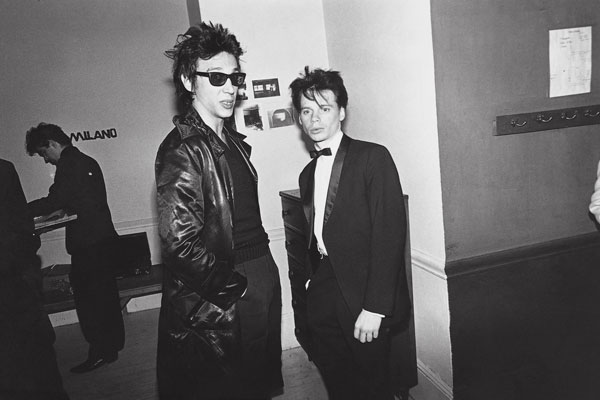
No Wave was a term, applied to a loose group of artists in the late 1970s and early 80s. This movement, contemporaneous with the tail-end of early punk, was often nihilistic, with abrasive music and confrontational stage shows. The movement started out as a loose collection of musicians and artists in New York City, who played atonal music with pounding, driving rhythms. Bands like Mars, DNA and James Chance and the Contortions made music that was abrasive, loud and sometimes depressing, reflecting the "wild west" atmosphere then present in NYC's Lower East Side. Many members of the no wave movement had started out as visual and performance artists, who turned to the music scene because it was much more vital. Because of this, No Wave always had a more artistic, even intellectual side than punk rock.


Today, No Wave's dark anti-style can be found everywhere, from the dark rock-chic of Endovanera, the sneering decadence of Conference of Birds, and the deconstructed suits and sweaters of Patric Ervell. Throw in a couple pieces from Shipley and Halmos and a pair of Cheap Monday jeans, and you're golden. Even though the members of that short-lived iconoclastic scene might hate to admit it, they are style has become downright iconic.


NEW WAVE
The new wave as a whole is quite confused concept, because it is bound with too much tendencies and bands, which have only part of the new wave sound. As it may sound strange, Sex Pistols were the perpetrators who bring this trend in 1976. They do it as an alternative to our well-known punk. In fact the term was equivalent to the vanguard and stylish new French film new wave direction of the 60s. Over the years, however, many punk bands borrow from the new wave and thus in the course of time the new wave and the punk turn into interchangeable concepts.
NO WAVE
No Wave was a term, applied to a loose group of artists in the late 1970s and early 80s. This movement, contemporaneous with the tail-end of early punk, was often nihilistic, with abrasive music and confrontational stage shows. The movement started out as a loose collection of musicians and artists in New York City, who played atonal music with pounding, driving rhythms. Bands like Mars, DNA and James Chance and the Contortions made music that was abrasive, loud and sometimes depressing, reflecting the "wild west" atmosphere then present in NYC's Lower East Side. Many members of the no wave movement had started out as visual and performance artists, who turned to the music scene because it was much more vital. Because of this, No Wave always had a more artistic, even intellectual side than punk rock.


Today, No Wave's dark anti-style can be found everywhere, from the dark rock-chic of Endovanera, the sneering decadence of Conference of Birds, and the deconstructed suits and sweaters of Patric Ervell. Throw in a couple pieces from Shipley and Halmos and a pair of Cheap Monday jeans, and you're golden. Even though the members of that short-lived iconoclastic scene might hate to admit it, they are style has become downright iconic.


Sub_Culture:DISCO TRANNIES and VOGUE-ERS

It is hard to find the origin of the disco culture. The beginning of the 1970 is considered as a landmark when almost at the same time in USA and in Europe people start to play it. Then in the discos were played audios by a presenter, called DJ (Disc-Jockey). For first representatives of the disco era are considered Bee Gees, Donna Summer, The Jackson 5. The fist disco club is Peppermint Lounge in Paristhat opens doorsstill inthe 50sand the first disco club in USAis"Whiskey-A-Go-Go" at Sunset Blvd. in Hollywood. In the 60s the disco didn’t appear yet, but some Cuban dancers danced some kind of salsa and swing that can be considered as the beginning of the disco subculture. In 1968 appears a kind of electronic music with synthesizers and like this bit by bit was born the disco music. It is a kind of continuous beat that allows the entering of one song in another without the stopping of the music. In the middle of the 70s the disco wave is in full force, and disco clubs were opened and closed in almost every city. One of the most famous disco clubs in the history of the disco culture is Studio 54 in New York.


Sub_Culture:HIPPIE
From the American Beat Generation in the 1950s, the "hipster" community arose in the free thinking Haight-Asbury neighborhood in San Francisco in the early 1960s.
Hippies who questioned authority and traditional values eventually made inroads into the mainstream, and spawned a cultural revolution that still resonates worldwide.
While the popular anthem of Sex, Drugs and Rock n' Roll sent shock waves across middle America throughout the 1960s, the politically-charged message of peace, love and brotherhood also spoke directly to the newly-formed Civil Rights Movement, as well as the unpopular war raging in Vietnam.
In retrospect, the hippie generation had direct global influences on music, television and film. It also made its mark on politics, fashion, hairstyles, the arts, and religion, including an emerging interest in Eastern philosophies and meditation.
Today, small groups of aging hippies continue to maintain the lifestyle, while in the Internet Age a fledging band of neo-hippies have emerged in online Web communities.
The movement as a whole is generally thought to have peaked near the end of the 1960s with Woodstock, but the hippie legacy and its influence can still be seen and felt in everything from the popularity of free summer music festivals to a sustained interest in organic foods.


Sub_Culture:FOLK
Folk style explores and celebrates the joys of living - and knitting - in an ever-shrinking world. Just like food, knitting inspiration has gone global; the idea of fusion has leapt confidently from the dinner plate to the knitting needles. Join talented top designers including Kristin Nicholas, Kate Gilbert, Annie Modesitt, Pam Allen, Leigh Radford, and more as they reinterpret ethnic and global influences into today's fresh styles.
Within the pages of Folk Style knitters will find items for women, children, babies, and the home. Patterns include a patchwork jacket, felted mukluks, a Slavic stovetop hat, a tribal baby carrier, Fair Isle socks, Nordic star pullover, shibori neck wrap, felted gauntlets, a Mexican floor pillow, Peruvian tunic, and much, much more. Filled with luscious lifestyle photos and easy-to-follow step-by-step instructions, Folk Style has everything the knitter needs to create amazing styles.


Subscribe to:
Posts (Atom)